
Cat-Cow : .Hydrate Spinal Discs
Loosen a stiff spine and teach it to move segment by segment.
Cat–Cow is your daily “oil change” for the spine—gently pumping fluid, restoring motion between vertebrae and helping your back stack taller when you stand.
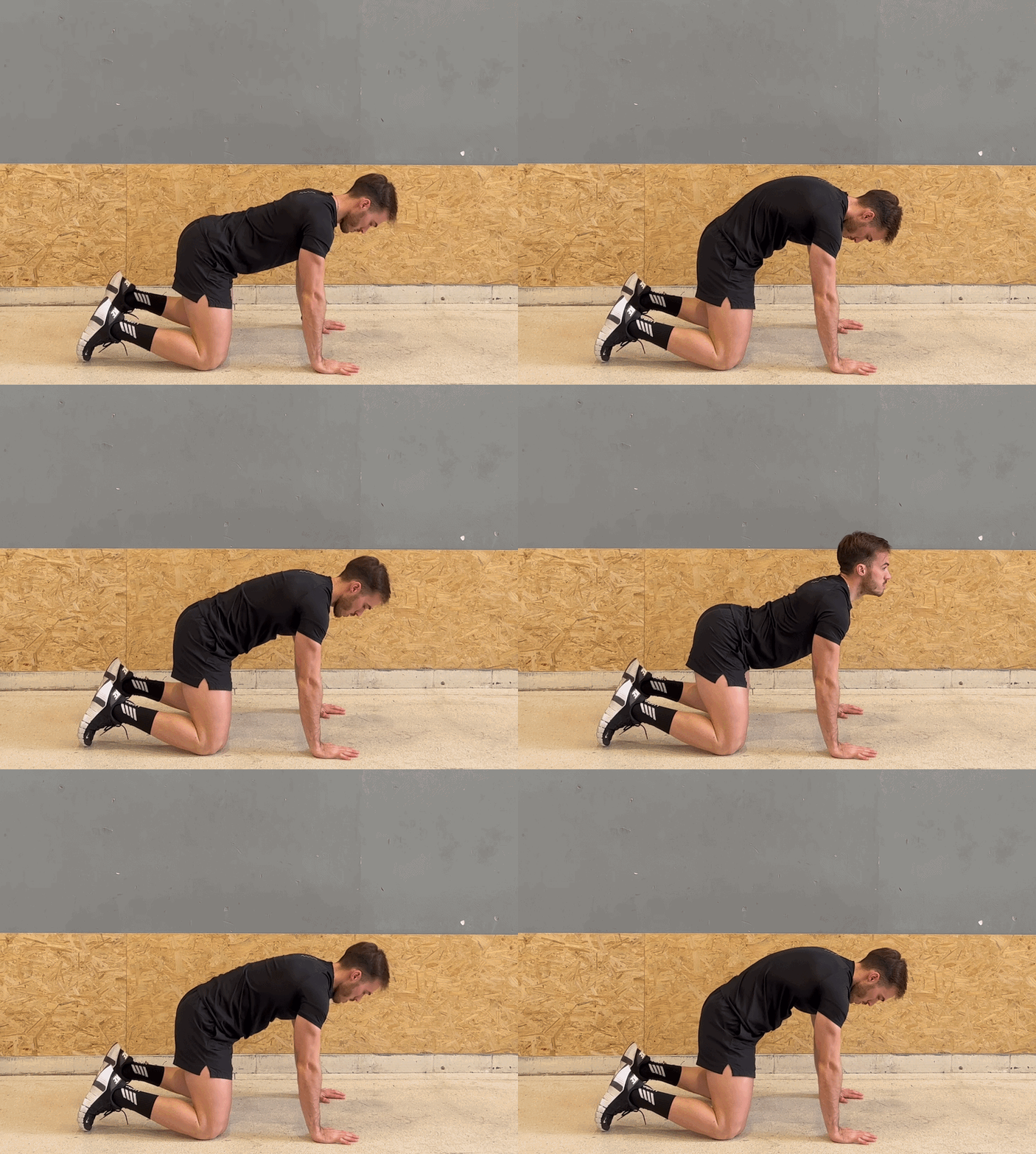
How to · How To Do Cat–Cow (Segmented Spinal Flow)
Think of Cat–Cow as joint-by-joint lubrication for every piece of your spine.
- Find neutral tabletop: Hands under shoulders, knees under hips, fingers spread wide, spine long and neutral with your gaze straight down between your hands. This is your “starting height” on all fours.
- Round into Cat: Press the floor away, gently tuck your tailbone under and slowly round your spine up toward the ceiling one segment at a time. Let your head hang heavy without forcing it down. Think of opening space between each vertebra.
- Flow into Cow: From the rounded position, reverse the motion: tailbone lifts, belly softens toward the mat, chest opens and your gaze comes forward or slightly up. Keep the movement slow so you feel the wave travel from lower back to mid-back to upper back.
- Link to breathing: Inhale as you drop into Cow, exhale as you round into Cat. Keep your elbows soft and shoulders away from your ears so the motion stays in the spine, not just the neck.
- Keep it smooth, not extreme: You’re looking for a comfortable arc, not a violent crunch. Aim for slow, controlled motion so your spine learns to move like a smooth wave instead of a stiff block.
- “Start from neutral, then move one vertebra at a time.”
- “Exhale to round, inhale to open.”
- “Let the spine move, not just your head and shoulders.”


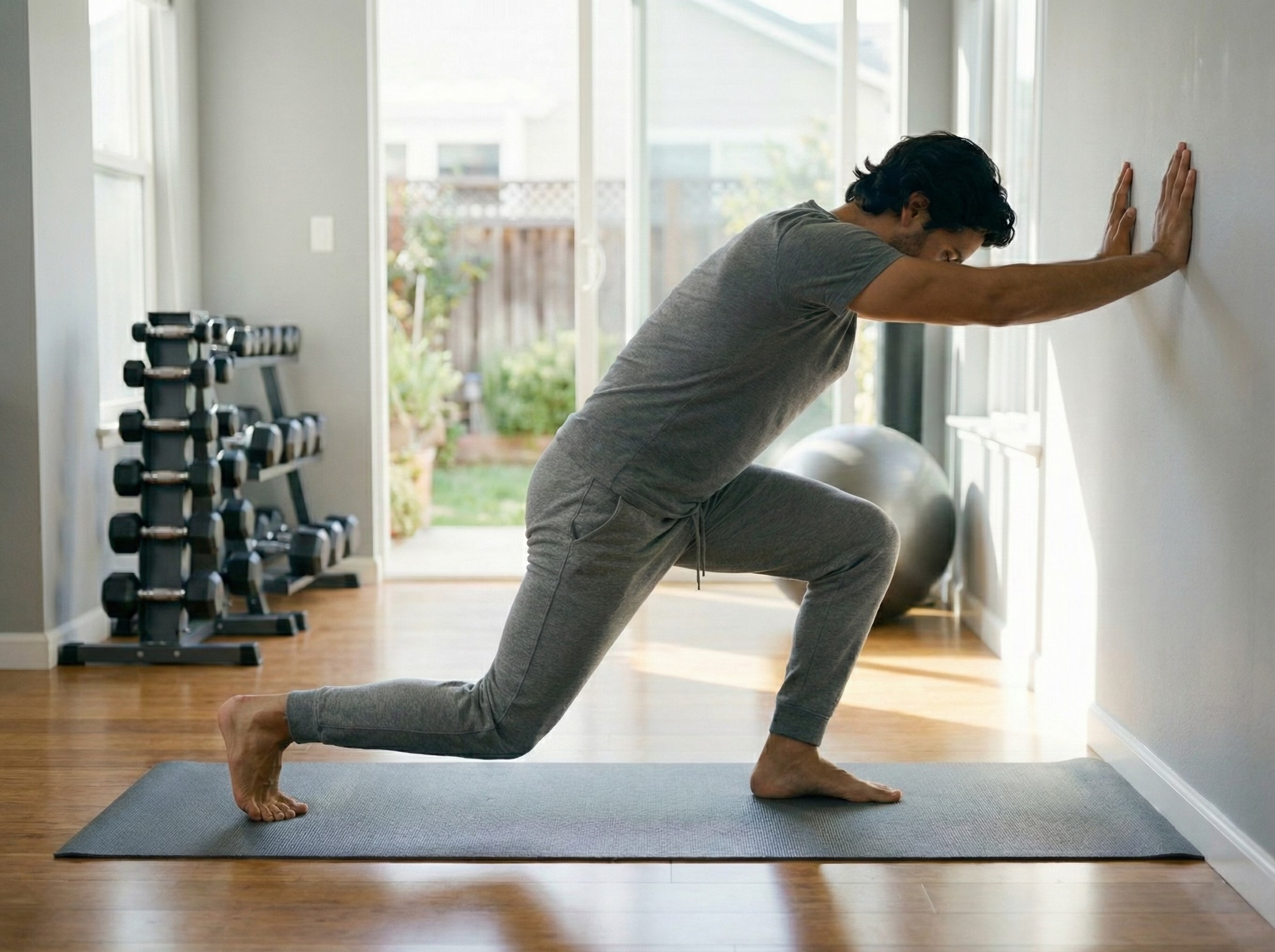
Flow & Sets · Reps, Sets & Frequency (Height-Focused)
Think smooth, regular flows instead of random “stretch once a week and hope.”
Tip: In the Height app, Cat–Cow often sits early in your routine so your spine is loose before you do any heavier decompression or posture work.
Variations · Easy Variations
Same goal—more motion between vertebrae—just scaled for how sensitive or stiff your back is.


Height Impact · How Cat–Cow Supports Your Height Line
- Frequent sitting, phone posture and stress can leave the spine acting like a stiff rod, which makes it harder to stand tall—even if your posture drills are on point.
- Cat–Cow gently cycles the spine through flexion and extension, helping to pump fluid around the discs and unlock sticky segments that stop you from fully “lengthening up”.
- Short-term, you often feel lighter and looser through your back, which makes upright, tall standing (Tadasana, Standing Posture Reset) feel way easier.
- Long-term, combining Cat–Cow with decompression moves (Passive Hang, Knees to Chest Rock) and posture work can help you realistically reclaim around 0.5–1.5 cm from the Spinal Decompression slice if you’ve been living with a chronically stiff, compressed back.
- You’re not stretching bones longer—you’re teaching the spine to move and stack so your full natural height actually shows.
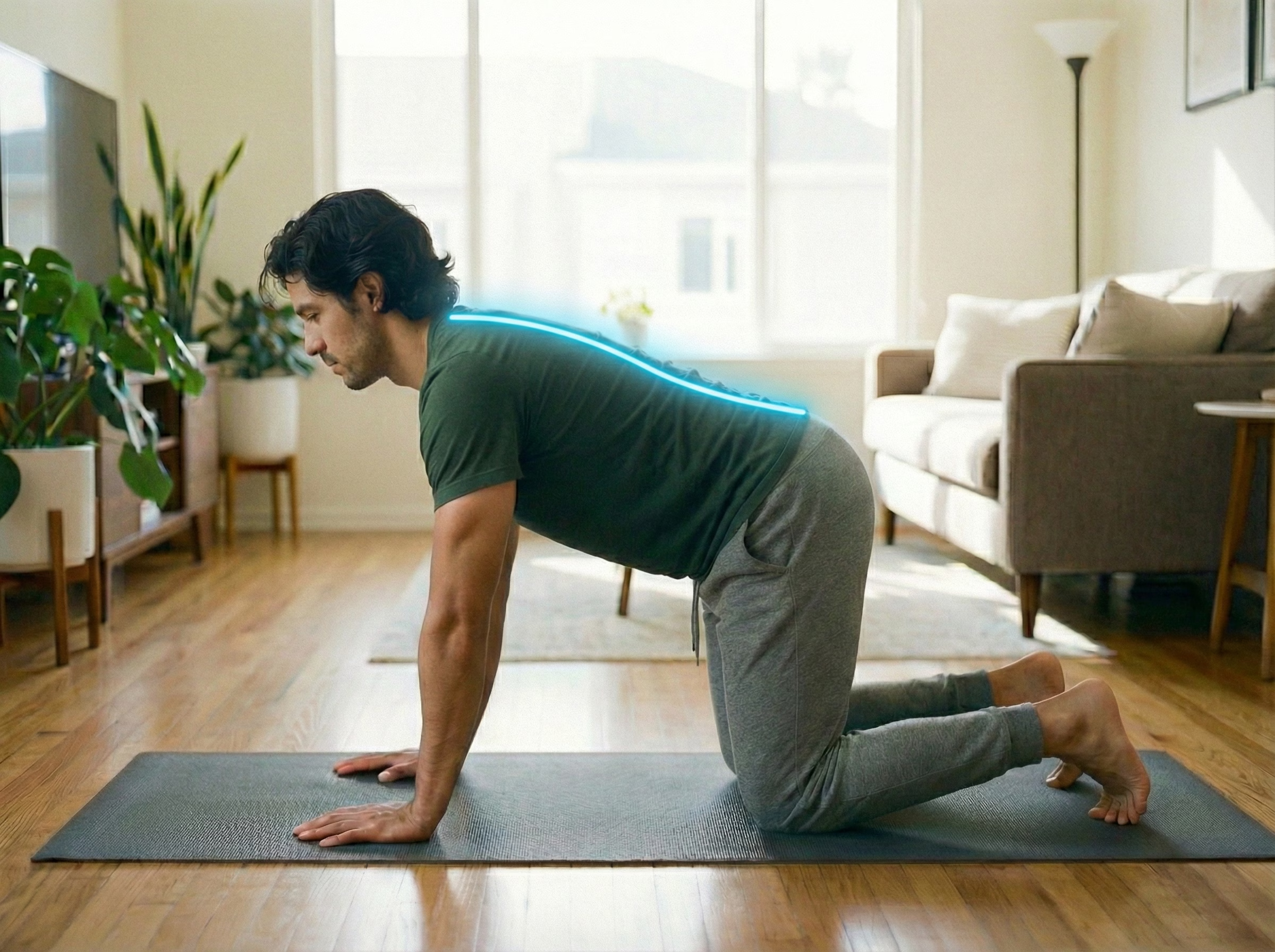
Panel 1 – Neutral Spine on All Fours
After a few slow sets, his spine rests in a natural neutral curve on hands and knees—
no rigid flatness, no exaggerated arch. A soft blue line along the spine shows how
smoother mobility supports decompression throughout the entire back.
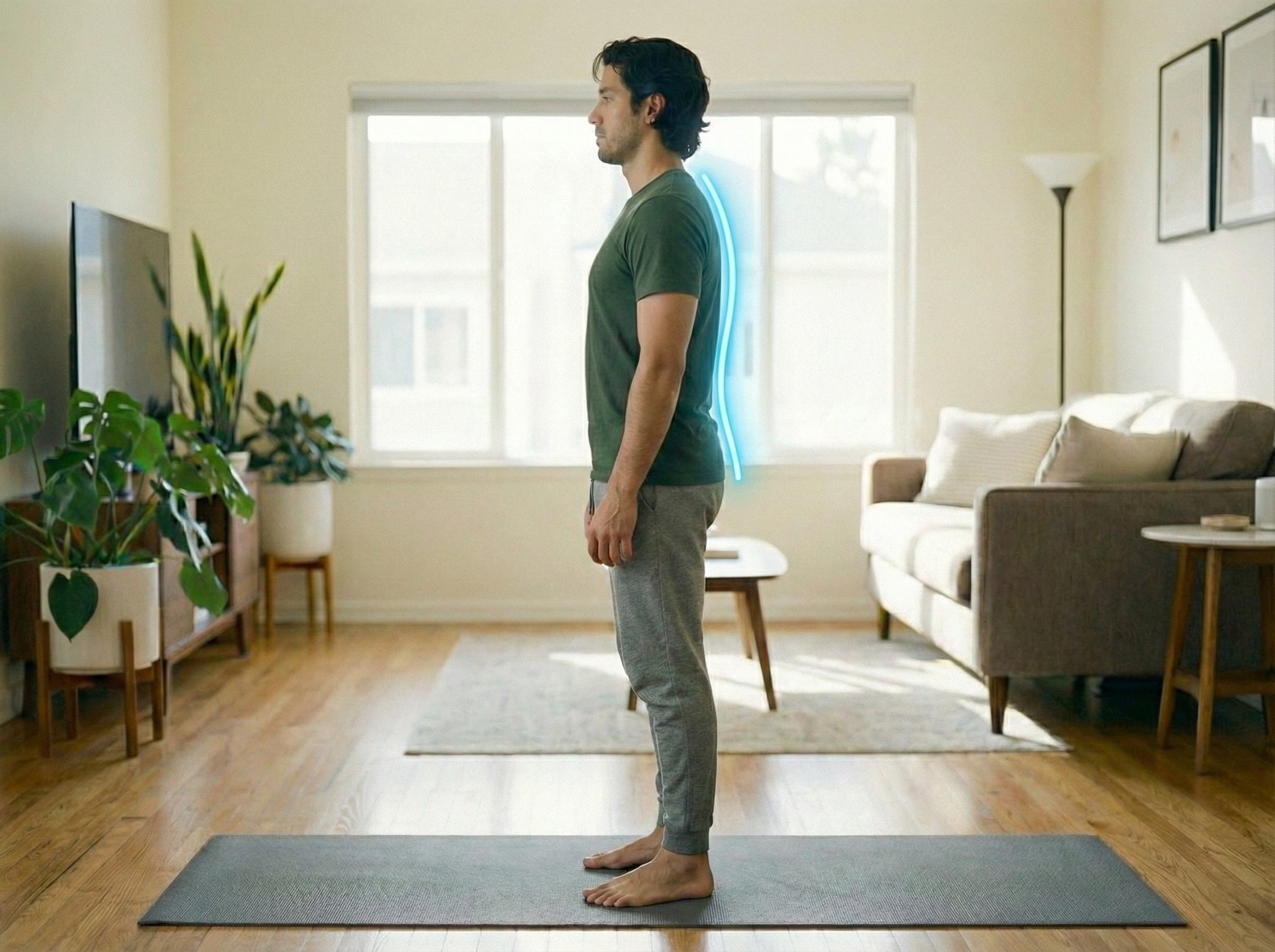
Panel 2 – Tall Standing with a Fluid Spine
Now standing, his head stacks over shoulders, chest open and each curve of the spine
flows into the next. That same blue line traces a taller, more relaxed column—showing
how a mobile spine can stack higher when you’re upright.
Form & Safety · Key Technique Cues, Precautions & Common Mistakes
- Start from a true neutral tabletop—hands under shoulders, knees under hips.
- Move slowly so you feel the wave travel along your spine, not just your neck.
- Breathe with the movement: exhale into Cat, inhale into Cow.
- Keep shoulders away from ears and elbows soft so you’re not jamming your joints.
Gentle Cat–Cow is low risk for most people, but intensity matters.
- If you have acute disc pain, keep the range very small and stay away from sharp “pinch” sensations.
- Move slowly—fast, jerky reps can irritate a sensitive spine instead of helping it.
- Stop if you feel electric, shooting pain or numbness; this drill should feel like relief, not threat.
- Throwing the head up and down while the rest of the spine barely moves.
- Dumping hard into the low back instead of spreading the curve along the whole spine.
- Locking the elbows and shrugging the shoulders toward the ears.
- Rushing the movement and turning it into a tired “up-down” instead of a smooth wave.
Why it steals height: Instead of spreading movement along the whole spine, everything collapses into the low back and neck—areas that are already overloaded. That kind of compression is the opposite of decompression and can leave you tighter when you stand up.

Why it steals height: You over-work the neck and upper traps while leaving the mid and low back stiff. That tension pattern is the same one that pulls your head forward and collapses your posture when you stand.

Pair With · Best Exercises to Pair With Cat–Cow
For the Spinal Decompression pillar, Cat–Cow works best with:
Use Cat–Cow early to get the spine moving, then layer in decompression (Passive Hang, Knees to Chest Rock) and posture drills so your back is both mobile and able to stack tall when you’re on your feet.
FAQ · Common Questions About Cat–Cow
-
Q1 Is Cat–Cow safe to do every day? ›For most people, yes—especially when you keep the range comfortable and the tempo slow. If your back is very irritated, shrink the movement to a tiny arc or stay in neutral and focus on gentle breathing until things calm down.
-
Q2 Can Cat–Cow alone make me taller? ›Cat–Cow on its own won’t magically add centimetres, but it helps your spine stay mobile and decompressed so other height-focused work (hanging, posture drills, strengthening) can actually stack your frame taller instead of fighting stiffness.
-
Q3 How should my back feel after a good set? ›You should feel warmer, looser and more aware of where each part of your spine is in space—not sore or “crunched”. If you feel worse after, reduce the range, slow down and focus on making the wave smoother instead of deeper.